Showing posts with label Zabag. Show all posts

Sunday, May 31, 2009

The Muslim Letters of Prester John

We have examined how Prester John sent letters to the Papacy and the Christian kingdoms of the West.

Equating Prester John with the historical king of Zabag known as the Mihraj, we have also seen how the latter king reached out to the kingdoms of Tibet, India and China, by sending gifts and supporting building projects abroad. Prester John, likewise, had proposed building projects in his message to Pope Alexander III.

The Mihraj was also in the habit of sending letters to the emperor of China, and the Sung Dynasty annals state that his kingdom used Chinese characters when sending such official correspondence. Two such letters are mentioned explicitely in the annals -- one in 1017 to the emperor and cast in "golden characters," and the other in 1080 from the king's daughter, in Chinese characters, addressed to the superintendent of trade. The latter however would not receive the letter but instead forwarded it to the emperor.

As discussed previously, in this author's opinion these overtures were part of the king's attraction policy that took on a special emphasis when Zabag's trade routes were infringed upon by expanding Muslim influence.

However, there may have been a time when the Mihraj also attempted to reach out to the Sunni Muslim juggernaut at the very beginning of the Umayyad Caliphate. S. Q. Fatimi has analyzed two letters from the "Mihraj" to the first Umayyad caliph Mu'awiyah in in 661 CE, and to the caliph Umar ibn abd al-Aziz (717-20). Fatimi marshals evidence to show that this king of "al-Hind" is, in fact, the ruler of Zabag. The very title "Mihraj" or "Mahraj" was used specifically in Muslim texts for the monarch of Zabag.

The first letter is recorded by al-Jahiz (783-869) in Kitab al-Hayawan. According to Jahiz, Abd al-Malik b. Umayr (822-3) saw the letter from the diwan (secretary) of Mu'awiyah and it was passed from him to Abu Ya'qub al-Thaqafi who relayed it to al-Haytham b. Adi, the source of al-Jahiz.

Unfortunately, Jahiz only records the greeting of the letter from the king of al-Hind "in whose stables are a thousand elephants, (and) whose palace is built of bright gold and silver, who is served by a thousand daughters of the kings, and who possesses two rivers, which irrigate aloes plants, to Mu'awiyah..."

The second letter is found in Al-Iqd al-Farid by Abd Rabbih (860-940) who gives as his source Nu'aym b. Hammad.

Nu'aym b. Hammad wrote: "the king of al-Hind sent, a letter to Umar b. Abd al-Aziz, which ran as follows: From the King of kings [Malik al-Amlak], who is the descendant of a thousand kings, in whose stables are a thousand elephants, and in whose territories are two rivers which irrigate plants of aloes, odoriferous herbs, nutmeg, and camphor, whose fragrance spreads the distance of twelve miles -- to the king of the Arabs, who does not associate other gods with God. I have sent to you a gift, which is not much of a gift but a greetings and I wish that you may send to me someone who might teach me Islam and instruct me in its Laws."


Similarities with Prester John's letter

Now we can immediately note some resemblances of these two letters with those sent centuries later by Prester John to the Christian emperors and kings.

First, there is the mention of the gift, which is not unusual in communication between kings. There is also the flowery, somewhat pompous, self-introduction of the king. In particular, the Mihraj uses the title "King of Kings" or Malik al-Amlak just as Prester John refers to himself as Rex Regnum "King of Kings." Both monarchs claim to have many elephants at their command, and there is also the mention from both the Mihraj and Prester John of a palace constructed with precious metals.

In Prester John's communication with Alexander III, he asks for instruction in the Catholic religion, and we see the same request, but this time with reference to Islam, in the second letter of the Mihraj.

Ibn Tighribirdi (1410-1470) gives another version of the second letter, on the authority of Ibn Asakir, in which he adds a sentence near the end: "I have sent you a present of musk, amber, incense and camphor, Please accept it, for I am your brother in Islam." This would imply that the Mihraj had accepted Islam, and Fatimi suggests that the king may have converted, but that the religion was latter rejected by his descendants. Another possibility, of course, is that Ibn Tighribirdi's late account uses unreliable sources. In either case, there is no evidence that Islam was practiced widely in Zabag at any point in its history.

However, we do see that the Mihraj follows a similar pattern of open patronage of multiple religions that we have suggested earlier was part of a long-standing royal policy of Zabag.

With reference to the "two rivers" mentioned in the Mihraj's letter, we note again the suggestion that one title for the king of the isles dating from ancient times was "Lord of the River." Fatimi, who holds that Zabag should be equated with Srivijaya, thinks that rivers mentioned are the Batanghari in Jambi and the Musi in Palembang.

The two rivers, in my view, would represent the primary drainage courses for the two sacred mountains, Pinatubo and Arayat. The Pampanga River, although it has its source further north, passes very close to Arayat and right through the town called Arayat, and thus was associated with that mountain. The river of Pinatubo could have been the Guagua River, but also the Masantol river which joins the Pampanga River in Masantol, where I have suggested the Zabag emporium was located. Visitors and merchants would have entered into the emporium by sailing up the Pampanga River and registering at the royal palace at Malauli before preceding further upstream.

In the Mihraj's letters, he mentions the spices of his kingdom including nutmeg, which was found only in the islands around and including Maluku (the Moluccas) and Mindanao. Nutmeg along with clove buds, which was found only in Maluku region, were traded mainly along the "Clove Route," which lead to the northwest along what the Chinese called the "Eastern Ship Route." I have suggested that this trade route was controlled primarily by the Mihraj.

The letters of the Mihraj can be viewed as early examples of a tradition of correspondence used by the king of Zabag to accomplish geopolitical goals. The timing of the letter coincided with the accounts of the Sayabiga, the natives of Zabag that I have suggested acted as agents of the Mihraj in latter times. However, the course of history would suggest that a "friendly" outcome was not achieved, and the kingdom of Zabag would later have to pursue other courses of action.

Regards,
Paul Kekai Manansala
Sacramento

References

Fatimi, SQ. "Two Letters from Maharaja to the Khalifah", Islamic Studies (Karachi), 2, 1 (1963), 121-40.

Rost, Reinhold. Miscellaneous Papers Relating to Indo-China. London: Trübner & Co, 1886, 188-91.

Thursday, March 26, 2009

Serlingpa: King of Suvarnadvipa

I have written previously about the introduction of the Kalacakra, the highest Tantric practice in Tibetan, Mongolian and Nepali Buddhism, into India from Shambhala.

Shambhala is equated with the kingdom known in Indian texts as Suvarnadvipa, and the agent who introduced the Kalacakra was none other than the Shamhbala king known as Kalki Sripala.

The mysterious kingdom of Shambhala gave rise to the fabled land known as Shangri-la from the 1933 novel Lost Horizon by British author James Hilton, and Shambhala has become focal point in many modern Western esoteric traditions. Madame Blavatsky and Nicholas Roerich, for example, emphasized the importance of Shambhala.

Shambhala became an important part of the "Great Game," the political intrigues particularly of the 19th and 20th centuries. The Russian imperial family including the Tsar had befriended the Lama Agvan Dorzhiev, who claimed that the Romanovs were the kings of Shambhala. Dorzhiev raised the suspicions of Lord Curzon, Viceroy of India, who thought that Russia might be conspiring with Central Asian nations to undermine British interests in India.

Baron von Ungern-Sternberg an anti-Bolshevik rallied Mongolians to fight the Soviet armies with the promise that they would be reborn in Shambhala. And during World War II, the Japanese after taking Inner Mongolia in 1937 attempted to gain Mongolian allegiance by claiming that Japan was Shambhala.


Serlingpa and the Kalacakra

Geshe Sopa, John Newman and others have suggested that Sripala is the same person known in Tibetan texts variously as Pindo (Pito), Dharmakirti, Dharmapala and Suvarnadvipi ("one from Suvarnadvipa.) The latter name is rendered in Tibetan as Serlingpa or Gserlingpa.

Serlingpa is described as a prince of Suvarnadvipa, while Sripala is listed in Kalacakra texts as the 17th king of the Kalki or Kulika (Tib: Rigden) lineage. Of all the kings of the ancient kingdom of Suvarnadvipa and its predecessors and successors, he is the best documented, and by a number of different traditions.

That Shambhala should be identified with Suvarnadvipa can be posited on a single argument as Tibetan texts describe the existence of the Kalacakra as only in Shambhala before it was introduced into India. The same tradition in some cases clearly suggests the existence of the Kalacakra in Suvarnadvipa without any explanation as to how it got there. And there is more than enough evidence to suggest that the Kalacakra was introduced to India from Suvarnadvipa, which would suggest that the latter is simply another name for Shambhala. Note these points:

  • In his history of Buddhism, Taranatha says that the Kalacakra was introduced into India by Pindo. Different sources claim that Pindo is one of the names of Serlingpa, the prince of Suvarnadvipa.

  • Atisha, the teacher who helped establish Buddhism in Tibet, says that he learned of the Paramadibuddha, the basic Kalacakra text, from the oral teachings of Serlingpa, who he also refers to as Pindo.

  • One of the oldest documents of the Tanjur, the second part of the Tibetan canon that consists of translations of older texts, is known as the Sri Kalacakra-garbhalankara. In the notes to a Peking manuscript of this text, authorship is ascribed to Pindo, "who was born in the land of the Southern Ocean." This ocean is generally associated with the world of Southeast Asia including Suvarnadvipa.

  • A prayer, from one of the two major lineages that have transmitted Tibetan Buddhism, and recorded by Bu ston calls on the blessings of "Kalki Sripala from the end of the Southern Ocean." According to this same lineage, it was Kalki Sripala who brought the Kalacakra to India.

  • According to both major transmission lineages, the Kalacakra came to India together with three major tantric commentaries. All three of these works cite the Paramadibuddha, the work taught to Atisha by Pindo , and two of them are called by names that Newman thinks can be translated as "a commentary according to the thought of Pindo."

  • From this evidence we can clearly see that: Serlingpa, who is also called Pindo and Kalki Sripala, is responsible for introducing the Kalacakra to India, and that he hails from Suvarnadvipa.

    Some aspects of the Kalacakra philosophy may have begun filtering in during 966 or 967 CE, but the main texts and traditions, which did not exist in India previously, were likely brought to that country by Serlingpa in 1012, the date on which the main Kalacakra astronomical calculations used in Tibet are based. It may be that this two-stage transmission accounts for some differences that exist between the two major transmission lineages.

    However, both lineages converge upon a person called Kalacakrapada the Elder, who according to the Rwa lineage inherits the Kalacakra doctrine from Pindo, while the 'Bro lineage has him receiving the knowledge from Kalki Sripala.


    Archaeological evidence

    Two sets of inscriptions from the Chola empire of South India may offer direct evidence of the existence of Serlingpa himself.

    Known as the Larger and Smaller Leiden Grants, these inscriptions tell of a king of Suvarnadvipa who builds a Buddhist shrine at Nagapattana in South India in the name of his father Culamanivarman. The Chola king Rajaraja grants a village for the upkeep of this shrine in the 21st year of his reign, or about 1005 CE. Centuries earlier, a Suvarnadvipa king had erected a Buddhist sanctuary at Nalanda in eastern India in the time of the Pala king Devapala.

    Now a work in the Tangur ascribed to Serlingpa states that it was written "on the request of king Sri Cudamanivarman, during the tenth year of the reign of Cudamanivarman, in Vijayanagara of Suvarnadvipa."

    The Sanskrit name Cudamanivarman is written in Tamil, as in the Leiden Grant, as Culamanivarman. Now given that Serlingpa was alive in 1005, these two references must be referring to the same king of Suvarnadvipa. And as Serlingpa is a prince of Suvarnadvipa who later becomes king, Culamanivarman should have been his paternal ancestor.

    Another manuscript of the Tangur found in Cordier's Catalogue calls the king Cudamanimandapa, while the Leiden Grant refers to the son who builds the Chola shrine as Sri Mara-Vivayottungavarman. So here again we see a variety of names as in the case of Serlingpa. The large number of names though is not unusual for royal personages who often have personal, throne, dynastic and other names usually as titles.

    Now the names Cudamanivarman and Cudamanimandapa might both be titles derived from the old kingdom known as Cudamani probably referring to Coda or Chola territory. Varman means "protector" and is often appended to the names of rulers, while "mandapa" would probably mean a temple or similar structure. It may be that these names or titles refer to the political relations between Suvarnadvipa and the Cholas that are mentioned in Sung Dynasty annals and in the work of Chinese geographer Ma Tuan-lin and referring to this period. In those works, Suvarnadvipa is known as Sanfotsi (Sanfoqi).

    The Sung annals state that the Sanfotsi king in 1003 sent envoys to China telling of a Buddhist temple that was built and said to be in honor of the Chinese emperor. This was very close to the time of the shrine built in South India, and the king at the time would have been Culamanivarman.

    Previously we have mentioned that the king of Suvarnadvipa-Sanfotsi was during this period using a policy of attraction to help in protecting his kingdom's age-old control of the Clove Route. We also hear from a temple inscription in Canton dated 1079 that the "Lord of Sanfotsi" had contributed funds toward the upkeep of not only Buddhist, but also Taoist temples in South China.

    According to Chinese records the throne would have passed from Culamanivarman to his son sometime befween 1003 and 1005 CE. Now when the teacher Atisha went to study under Serlingpa in 1012 or 1013, some sources call the latter "Lord of Suvarnadvipa," which could mean that he was the sovereign at the time. Thus, Serlingpa would have been the son of Mara-Vivayottungavarman, who was the son of Culamanivarman and the person who built the Buddhist shrine in Chola country.

    Taranatha mentions that Pindo brought the Kalacakra to India during the second half of Mahipala's lifetime. Newman thinks this Mahipala must be the Pala king with that name who reigned between 988-1038, but it's not impossible that Taranatha is referring to Kalki Mahipala, the father of Kalki Sripala (Serlingpa) according to Kalacakra tradition.


    Suvarnadvipa as learning center

    As early as the T'ang Dynasty, Chinese texts tell of a renowned Buddhist learning center somewhere in Insular Southeast Asia.

    The traveler I-Tsing (Yijing) describes this center in a place called Fo-hsi. The location of Fo-shi is important and he says that one travels there from Canton sailing toward the asterisms Yi and Tchen, which in the Chinese sidereal compass represent the directions between south-southeast and southeast. The explorer Kie Tan gives a detailed itinerary for the journey to Fo-hsi, which also locates it southeast of Canton. I-Tsing also calls Fo-Shi by the name Chin-chou "Gold Country," which is probably a translation of Sanskrit Suvarnadvipa.

    Al-Biruni tells us that Suvarnadvipa was known among the Muslims as Zabag -- a location widely seen by geographers as referring to what the Sung Chinese called Sanfotsi. We can verifym using the works closest to the date of Serlingpa, that these locations agree with the directions given for sailing to Fo-hsi during the T'ang Dynasty.

    For example, Mas'udi writing in 947 tells us that Zabag was located in the Sea of Champa, i.e. in the ocean adjacent to what is now known as Central Vietnam, and that beyond Zabag was a great ocean of unknown limits i.e., the Pacific Ocean. The same author tells us that Zabag was oriented toward the land of the Khmer, i.e., what is now Cambodia and southern Vietnam, in the same way that Sri Lanka is oriented toward Madurai in South India. That is to say that Zabag was to the east of the land of the Khmers across the sea.

    Sung Dynasty works like those of Zhao Rugua and Zhou Qufei clearly place Sanfotsi along the Eastern Ship Route. Because of the dangers posed by the coral islands and outcroppings now known as the Spratly and Paracel islands, Chinese mariners avoided crossing the middle of the South China Sea. Instead they either hugged the coast from Quanzhou in Fujian to Vietnam to the markets of Zhangcheng (Tonkin) and Zhenla (Cambodia) -- a course known as the Western Ship Route. Or they sailed due south from Quanzhou stopping at Taiwan and the Philippines before going further south toward Maluku.

    When Atisha came to study with Serlingpa, Suvarnadvipa was the center of a great trade empire. Earlier, near the end of the 7th century, Dharmapala, abbot of Nalanda university, is said to have ventured to Suvarnadvipa to study alchemy near the end of his life. In the 8th century, the South Indian monk Vajrabodhi studied for five months in Fo-hsi before traveling to China where he is said to have introduced Tantric Buddhism.

    However, we should note that despite its popularity with Buddhists there is evidence of a great deal of religious plurality in Suvarnadvipa. Already mentioned was the contribution made by the Suvarnadvipa king toward maintenance of both Taoist and Buddhist temples in 1079. In 983, we hear from Chinese records that "the priest Fa-yu, returning from lndia where he had been seeking sacred texts, arrived at Sanfotsi where he met the Hindu priest Mi-mo-lo-shih-li, who after a short conversation gave him a petition expressing his desire to visit the Middle Kingdom and translate sacred books there."

    Islamic writers, who elsewhere show much interest in religious practices, make no mention of the religion practiced in Zabag to this author's knowledge. Islamic terms for Buddhism like samani, budd, buddah, budhah, bahar, etc. are not used in describing Zabag, nor is any other specific term giving of the local religion with the exception that the inhabitants are sometimes called majus, which could be interpreted as "fire-worshipper."

    Again I would assign this to the king's policy of attraction and the general pluralistic society that existed at the time. We know, for example, that while Atisha studied in Suvarnadvipa, there were prophecies of his eventual journey to Tibet. And when his studies were completed, Serlingpa himself is said to have advised Atisha to "go to the north. In the north is the Land of Snows [Tibet]."

    Those who have followed this blog will know that I have suggested that the Suvarnadvipa king was interested in rallying Tibet and India behind his cause in stopping the Muslim juggernaut. Not because of any anti-Muslim viewpoint, indeed texts like the Arabian Nights and Buzurg ibn Shahriyar's Wonders of India indicate that Muslims found Zabag as a very friendly place. Also, I have suggested that the Suvarnadvipa king, under the identity of "Prester John," had actually conspired with Shi'ite Muslims to undermine the threat posed by Sunni expansion along the maritime trade routes.


    Works of Serlingpa and impact

    Besides his part in transmitting the Kalacakra doctrine, Serlingpa is credited with six original works that appear in the Tangur. The most impressive both in length of its title and content, and the scope of its exposition on Mahayana Buddhist philosopy is the Abhisamaya-alamkara-nama-prajnaparamita-upadesa-sastra-vritti-durbodha-aloka-nama-tika.

    Some of Serlingpa's sayings that have been preserved might give us some insight on this thinking and teachings. On suffering, Serlingpa taught:

    Adverse conditions are one's spiritual teacher,
    Ghosts and possessor spirits, the Buddha's emanations.
    Sickness is a broom clearing away negativity and obstructions,
    The sufferings are ornamentation of ultimate reality's expanse.
    These are the four thoroughly unenlightened factors,
    They are essential to tame places that are far from dharma [law],
    They are essential too in times of degeneration
    To help bear negative samsara [repetition] and its misguided ways.

    On the self and self-interest, Serlingpa teaches that one should instead focus on the other:

    Self is the root of [all] negative actions;
    It is the one thing to be discarded with decisiveness.
    The other is a source of enlightenment;
    It is the one thing to be embraced with enthusiasm.
    These two teachings condense those to be relinquished and their antidotes,
    They are vital in places afar from dharma
    They are essential too in times of degeneration,
    To help bear negative samsara and its misguided ways.

    Serlingpa's pupil Kamala was the author of nine works in the Tangur, but Atisha must be considered Serlingpa's most important student. Not only does it appear that Serlingpa had the greatest impact on the training of Atisha, but it was in his kingdom and under his advice that Atisha brought the Sarma lineages to Tibet when Buddhism was under repression by King Langdarma. In his biography, it is said that Atisa upon hearing the name of Serlingpa immediately clasped his palms together at his crown and tears would fall in remembering his teacher's kindness. He credited Serlingpa with leading him to bodhicitta, the desire for enlightenment to help other beings.

    Through his influence on Atisha and by introducing the Kalacakra philosophy, Serlingpa had a great impact on the development of the culture of modern Tibet, Mongolia, Bhutan, Nepal and parts of India; and indirectly on modern Western esoteric traditions.

    Regards,
    Paul Kekai Manansala
    Sacramento

    References

    Chattopadhyaya, Alaka, Atīśa, and Chimpa. Atīśa and Tibet; Life and Works of Dīpaṃkara Śrījñāna in Relation to the History and Religion of Tibet, [Calcutta]: distributors: Indian Studies: Past & Present, 1967.

    Newman, John. "A Brief History of the Kalachakra," in: Geshe Lhundup Sopa, et al.
    The Wheel of Time: The Kalachakra in Context, Deer Park Books, 1985, 51-90.

    Rost, Reinhold. Miscellaneous Papers Relating to Indo-China. London: Trübner & Co, 1886, 189-90.

    Tan Yeok Seong, "The Srivijaya inscription of Canton (A.D. 1079)", Journal of Southeast Asian History 5,2 (1964): 21.

    Friday, January 09, 2009

    Sayabiga and Rice Agriculture in the Middle East

    The recent posts on irrigation provide an opportunity for a segue to the question of the Sayabiga that has been discussed earlier in this blog.

    M. J. de Goeje in 1894 first suggested that the Sayabiga, mentioned in medieval Muslim texts, came from the kingdom of Zabag in Insular Southeast Asia. De Goeje was later followed by and expanded upon by G. Ferrand in 1934. I have located the kingdom of Zabag in the same pampang area discussed in some recent postings.

    Now, the medieval records state that the Sayabiga were living along the Persian Gulf coast during the reign of the Sassanian king Bahram V (420-38). After the Muslim conquest, the Sayabiga along with a group known as the Zutt, who were probably related to the modern Jats of Sindh, were relocated by the Caliph to the marshlands around the present-day Shatt-al-Arab. The Zutt and Sayabiga, along with the Zanj from coastal southern Africa, worked on draining the swamps in this area.

    The two groups, the Zutt and Sayabiga, were said to raise water buffalo that put the "lion to flight," and to have introduced rice farming into the area. Rice became popular in the area at the time and came to form the staple in the Shatt-al-Arab and nearby areas from that period until the present day. Later on, because of the problems with lions in Antioch, the Zutt and Sayabiga along with their water buffalo herds were moved to that region to rid the area of lions.

    What is interesting is the rice agriculture system present today along the Shatt-al-Arab.


    View Larger Map

    The area around Basra and the Shatt-al-Arab in southern Iraq where the Zutt and Sayabiga were settled.


    The irrigation system here is controlled by a system of mud dikes. The areas furthest from the river remained relatively dry and is planted with wheat and barley. The middle area, which was irrigated by the tides, is cropped with millet and maize. The area closest to the Shatt-al-Arab remains wet all the time and is planted with rice i.e. wet rice agriculture.


    View Larger Map

    Close-up of diked fields, some in disuse, along the Shatt-al-Arab. This area has been famous for its canals since medieval times.

    Another interesting area of research here would be to compare tidal fishing methods to see if there is any sign of Sayabiga influence. Some of the fish traps like the valve room trap, the mud dam trap and the milan trap (see: http://www.public.iastate.edu/~mariposa/MarinaMesopotamica/2006/pdf/2006OL_0101pp001037.pdf), look quite similar to methods used far to the east in Pampanga.

    There has also been a suggestion that oculi or boat's eyes painted on the bow as amulets and found on medieval Arab dhows were brought to the region by the Sayabiga (see Peabody Museum of Salem, The American Neptune, p. 42; also Waruno Mahdi "The dispersal of Austronesian boat forms in the Indian Ocean," IN: Roger Blech, Matthew Spriggs, Archaeology and Language: Artifacts, Language and Texts, Routledge, 1999, 162.)

    Regards,
    Paul Kekai Manansala
    Sacramento

    Saturday, November 22, 2008

    The Royal Way

    In the first Google Earth image below, the main river leading from the Manila Bay to the confluence at the southern portion of Masantol is shown.

    The river is flanked by two massive dikes or earthen barriers. Masantol was formerly a barangay (district) of the now-sleepy and backward town of Macabebe. When the Spanish first arrived in this area, Macabebe was one of the largest population centers of what is now the Philippines. The confluence could be known in the local languages as "sambal" or "sabang" and this is the area that I equate with the medieval Zabag.

    About half the distance to Masantol is one of its barangays known as Malauli. It is at this point that the water turns from salt/brackish to freshwater. Here also local legend says that the king who opposed Martin de Goiti and the invading Spaniards resided, although now it is very sparsely populated. He is known variously as Rajah Bambalito or Rajah Soliman. Click on the images below for the full image size.


    Click on image for full view

    Medieval texts also state that the king of Zabag lived in a estuary that was salty during high tide and sweet during low tide. One could view such an area as the real beginning of the river, the point at which the sea, represented by saltwater, ends.

    In this blog, I have suggested that the king of Zabag was the "Lord of the River" and thus his position at the entrance point would have been traditional. However, we should note that the divergence area of salt and sweet water may have varied over long periods. The king would guarded the way to the emporium at the sabang/confluence or Zabag.


    Click on image for full view

    In the image above, we see a closeup of the confluence near the southern end of Masantol town proper (Barangay Santa Lucia). The dikes, known as pangpang, pampang and bangbang, give the local province its name of "Pampanga." These massive dikes, unlike anything else in the province with houses and roads built on top, begin here at the confluence and end at the mouth of the river along the Manila Bay.


    Click on image for full view

    In addition to guarding the way to the market of Zabag, the king would even more important control the recognized waterway for visiting the sacred mountains of Pinatubo and Arayat to the north. Visitors could continue on boat using the rivers to reach Betis from where they presumably would proceed on foot. The distance from Masantol to Pinatubo is about 28.5 miles as the crow flies, and 19.5 miles to Arayat.


    View Larger Map

    You can grab this image above with your mouse, or use the arrows, to navigate up the river toward Masantol.

    Saturday, April 19, 2008

    Lung-t'sing 龙精

    In the Hirth and Rockhill translation of the Chu-fan-chi (Zhufanzhi) of Chau Ju-Kua, the title of the king of Sanfotsi (Sanfoqi) is given:

    They style their king Lung-ts'ing (龙精). He may not eat grain, but is fed on sha-hu; should he do otherwise, the year would a dry one and grain dear. He also bathes in rose-water; should he use ordinary water, there would be a great flood.

    Various explanations have been offered to explain the title Lung-ts'ing (long jing) including translations of local Sanfotsi words. Suggested meanings include "Dragon Sperm" and "Perfected Dragon."

    More likely the term is an attempt to transliterate a native word. Hirth and Rockhill suggest the first part "lung" might be related to Malay arung "kings."

    If we take the southern pronunciations, merchants from Quanzhou may have used something closer to "Lungzing," while "Lungzeng" would be a possible Canton version. The character ts'ing or jing ç²¾ in the South would be pronounced zing, zeng, zin, etc. Lungzeng or Lungzing could have been an early corrupt rendering of "Lusung" or "Lusong." Otherwise the latter name appears correctly starting in the Ming Dynasty.

    Thus, Lung-ts'ing may come from a title like "King of Luzon (Lusung)."

    The name Lusung, as we have discussed previously in this blog, would refer to the sacred mountain of the Sanfotsi kingdom. There exists today other mountains, hills and geologic formations in the region with names that are cognate to lusung "mortar" including Mt. Lusong in Benguet, northern Luzon; Mt. Lesong in Bali and Batu Lesong in Malaysia. These names probably derive from the mortar-like shape of the landmarks.

    The lusung or mortar-shaped sacred volcano in this case would be Mt. Pinatubo (and Mt. Arayat) located in the region and kingdom known as Sambali, the latter word giving rise to the Chinese name Sanfotsi (saam-bat-zi) in our estimation. The location was described as rich in alluvial gold. During the mid-10th century, Akbar al-Sin states that

    "near Zabaj is a mountain called the Mountain of Fire, which it is not possible to approach. Smoke escapes from it by day and a flame by night, and from its foot comes forth a spring of cold fresh water and a spring of hot water."

    The palace of the king of Zabag, again the Arab name for Sanfotsi, was described in Muslim texts as located at the water's edge of an estuary close enough to the "bay of Zabag" that saltwater flowed during high tide and freshwater during ebb. Such an estuary, it's been suggested earlier, was known in the local language as sapa, sabang or sapang from which the Arab place-name "Zabag" would be derived. Abu Zayd said that the kingdom of Zabag faced China, probably referring to the southern port of Canton, which would have been directly across the Nanhai (South Sea) to the northwest. This geographical description is confirmed by Mas'udi who states that the kings of the Khmer kingdom (Cambodia) face toward the kingdom of Zabag during their morning prayers i.e., toward the East, the sunrise.

    As an aside, on Chau Ju-Kua's statement above that the king must eat sha-hu (sago) and bathe in rose-water to avoid famine and flood respectively, this is an example of the sacred king seen as an embodiment of nature and the kingdom. We find this concept widely spread in the galactic polities of Southeast Asia and the Pacific.

    Regards,
    Paul Kekai Manansala
    Sacramento

    References

    Hirth, F. and W. W. Rockhill. Chau Ju-kua. His Work on the Chinese and Arab Trade in the 12th and 13th Centuries, entitled Chu-fan-chi, St. Petersburg, 1911.

    Saturday, February 10, 2007

    Sambatyon River (Article)

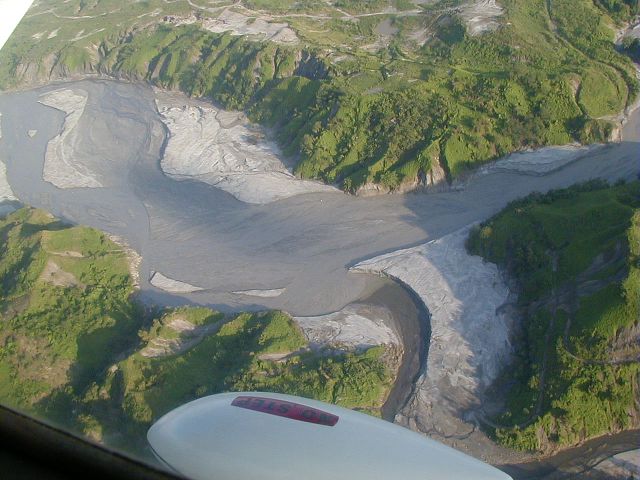
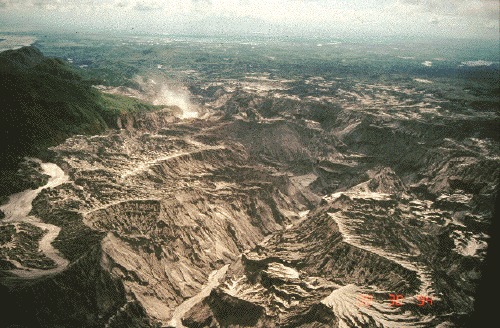
    The Sambatyon River is described in Jewish and Christian literature as a river of sand and rocks that stops flowing or solidifies on the Sabbath day. A similar river known as the Wadi al-Raml "River of Sand" is found in Islamic literature. This river was closely linked with the "lost" Ten Tribes of Israel.

    According to the Jewish Encyclopedia, the first use of the name "Sambatyon" occurs in the Targum of pseudo-Jonathan to Ex. xxxiv. 10: "I will remove them from there and place them beyond the River Sambation."

    Some think the name "Sambatyon" may be related to an earlier Sabbaticus river mentioned by Josephus and Pliny described as flowing according to a weekly schedule but Josephus states the river flows only on the Sabbath opposite what is said in other traditions. Neither Pliny or Josehphus describe a river of sand or stones. Josephus links the river with Jews during the time of Titus but not specifically with the Ten Tribes. Since the earliest times there has been disagreement on whether the Sambatyon and Sabbaticus rivers were related.

    The first mention of a river of sand and stones connected in some way with the "lost tribes" actually occurs in Islamic literature. A group known as the "people of Moses" is mentioned in the Quran, and the commentator Muqatil bin Sulayman (767 CE) associates them with the lost tribes. He further places the people of Moses, numbering 70,000, beyond a river of sand in China. Several hadith tell of how the people of Moses dug a tunnel from the Temple Mount to or beyond China where they lived pious lives, and where Muhammed introduced them to Islam during his "night journey."

    Muqatil b. Sulayman called the land of the people of Moses by the name Ardaf. The name resembles the location Arzaf mentioned in 4 Ezra 13 as the place to which the Ten Tribes escaped.

    And, whereas, thou sawest that He gathered another peaceable multitude unto Him; those are the Ten Tribes which were carried away out of their own land in the time of Osea (Hoshea) the King whom Shalmaneser the King of Assyria led away captive, and he carried them over the waters, and so they came into another land. But they took this counsel among themselves, that they should leave the multitude of the heathen, and go forth into a further country. where never mankind dwelt, that they might there keep their statutes, which they never kept in their own land. And they entered into the Euphrates by the narrow passage of the river; for the Most High then showed signs for them, and held still the flood till they were passed over. Through that region there was a long way to go, a journey of a year and a half; and that country is called Arzaf [Latin Arzareth]. "Then they dwelt there until the last times; and now, when they are about to come again, the Most High will stop the channels of the river again, so that they may be able to pass over."
    Ezra has a dream where a fire-breathing messianic figure arises from the stormy sea and carves a great mountain for an apocalyptic battle. After vanquishing a great host that had come against him on the mountain with a stream of fire from his mouth, the savior figure calls another "peaceable" multitude, an event widely interpreted as indicating the return of the Ten Tribes.

    The Jewish traveler Eldad Hadani around the ninth century CE, mentions the people of Moses (beney Mosheh) living beyond the river of sand giving a complete tale combining many elements of the Hebrew and Islamic versions. Again, the Sambatyon River acts as a barrier sequestering the Ten Tribes and preventing their return to Israel.

    Jewish texts like Pesikta Rabbati and Genesis Rabbah mention the tunneling story but in this case it is God who creates a tunnel from the land beyond Sambatyon which allows the Ten Tribes to return to the Mount of Olives in Jerusalem.

    Eldad Hadani describes the thunderous noise made by the Sambatyon:


    "...the river is full of large and small stones, thundering with stormlike, deafening noises by day and by night; it can be heard a day's journey away. The river flows with its noisy stones and sand all the six days of the week; on the Sabbath it ceases and rests until the termination of the Sabbath."


    This and similar descriptions have led researchers like David Kaufmann to suggest that the flowing sand and stones were caused by volcanic action. In Ma'ase Nissim, Gershon Halevi states while traveling in India that two days from Seviliah he encountered the Sambatyon:


    At some locations, I noticed a fire burning; other places appeared as rising smoke, and I was told that this is the smoke of the Gay Hinnom, like the mountains of Sicily in Italy. As we approached the town, which is near the Sambatyon, we heard turbulent, thundering noises. The closer we came to the town, the more deafening the noises became. Upon my inquiry I was told that this was the roar of the Sambatyon.

    The belief that the Ten Tribes were held back both by the Sambatyon and also the Euphrates, and were able to cross these rivers only with the intervention of God brings to mind verses in Revelation which tell of the drying of the Euphrates to make way for the Kings of the East. In some accounts of Prester John, who is closely linked with the Ten Tribes beyond the river of sand/stones, it is said that his failure to reach Jerusalem was caused by his inability to cross the Euphrates.

    Google satellite view of a modern-day "river of sand," the
    Pasig River near Mt. Pinatubo south of Clark Field.


    Pictures of the Sacobia-Bamban river

    http://www.clarkab.org/photos/a35.jpg

    http://pubs.usgs.gov/pinatubo/punong1/fig9b.jpg
    Regards,
    Paul Kekai Manansala
    Sacramento

    References

    Singer, Isidore; Alder, Cyrus; (eds.) et al. The Jewish Encyclopedia, Funk and Wagnalls, New York, 1901-6.

    Saturday, February 18, 2006

    Glossary: Mihraj

    Medieval Islamic texts used the word Mihraj or similar forms like Mihrjan to describe the king of the Zabag empire in the East Indies. Mihraj may be a corruption of the Indian Maharaja "Great King." Writers of the time described the Mihraj's influence as extending over vast territories from the Indies to East Africa. Some of these claims are substantiated by physical evidence such as the written records of the kingdoms of Champa and Cambodia, and land grants in South and East India. According to the texts, Zabag and its southern neighbor Wakwak competed for the highly lucrative East African trade. Income from the mercantile trade made the Mihraj very wealthy at that time. In the One Thousand and One Nights and other Arabic literature the Mihraj along with the legendary Solomon are held as ideals of royal wealth. Sindbad visits the Mihraj on the "Isle of Mares" in one of most well-known of his voyages.
    In the sea of Champa is the empire of Mihraj, the king of the islands, who rules over an empire without limit and has innumerable troops. Even the most rapid vessels could not complete in two years a tour round the isles which are under his possesssion. The territories of this king produce all sorts of spices and aromatics, and no other sovereign of the world gets as much wealth from the soil. -- Mas'udi, AD 943
    Despite the wealth of the Mihraj, his capital is described as a 'town' in Muslim literature. His palace is located on the water's edge in an estuary, and from his patio he daily threw gold bars into the water to propitiate the sea. At low tide, the pile of gold was exposed for all to see, and when the king died the gold was distributed to all the people of the land. The greatness of the king was judged by the amount of gold so accumulated. In the capital, fisher folk living in their boats or homes over the water were exempted from taxes. The Mihraj was the model of the Fisher King, the "Lord of the Net." The rural setting of his kingdom is detailed by Abu Zaid who states that "patches of settlement succeed each other without interruption" and further mentions an "uninterrupted and regular succession of villages."
    A very trustworthy man affirms that when the cocks crow at daybreak, as in our country, they call out to each other throughout the whole extent of a hundred parasangs [~500 kilometers]...In effect, there are no uninhabited places in this country and no ruins. He who comes into the country when he is on a journey, if he is mounted he may go wherever he pleases; if he is tired or if his mount has difficulty in carrying on, then he may stop wherever he wishes. -- Abu Zaid, 10th century
    Policy of Attraction During the heyday of Zabag between about 800 CE to 1300 CE, the Mihraj maintained an "open door" policy, as mentioned above by Abu Zaid. Merchants were encouraged to enter and stay in the country. Idrisi states that in particular the merchants of China favored trading in the islands of Zabag:
    It is said that when the states of affairs of China became troubled by rebellions and when tyranny and confusion became excessive in India, the inhabitants of China transferred their trade to Zabag and the other islands dependent on it, entered into relations with it, and familiarized themselves with its inhabitants bcause of their justice, the goodness of their conduct, the pleasantness fo their customs, and their facility in business. It is because of this that this island is so heavily populated and so often frequented by strangers. -- Idrisi, 12th century
    Later during the Ming dynasty, the kingdom of Lusung, Zabag's successor, continued this policy and when the Spanish arrived in Luzon there existed merchant communities from China and Japan on land granted by the Lusung king. The large Chinese trading community of the Manila Bay was known as the Parian.
    Lusung is situated in the southern seas not far from Chang-chou (in Fukien)...In the past, thousands of Fukienese merchants lived there for a long period without returning home, because the land was near and rich. They even had children and grandchildren. -- Ming-shi (Dynastic annals of the Ming Dynasty)
    Not long after reaching the pinnacle of its power, Zabag was threatened by its powerful neighbor to the South. In the late 10th century, an attack by Wakwak prompted the Mihraj to send an embassy to the Sung dynasty requesting assistance. Such a policy of attraction appears to have been a necessary strategy for the Mihraj, whose trading empire was also under attack in the far West. Indeed both Wakwak and Zabag faced problems with their ancient East African spice routes due to the expansion of Islam. Wakwak for its part decided on massive military action. An expedition in the 10th century of fleet of one thousand ships was sent to the African Zanj coast and to Qanbalu, which by this time was nearly completely in Muslim hands. Arab merchants from Oman were taking over the trade.
    Ibn Lakis has imparted to me some extraordinary pieces of information concerning them. It is thus that in 334 AH (945-6 CE) they came upon Qanbalu in a thousand ships and fought them with the utmost vigor, without however achieving their end, as Qanbalu is surrounded by a strong defensive wall around which stretches the water-filled estuary of the sea, so that Qanbalu is at the center of this estuary, like a fortified citadel." -- Kitab aja'ib al-Hind of Buzurg ibn Shahriyar (955 CE)
    The vast Wakwak fleet traveled for one year to attack Qanbalu, Sofala and other Zanj settlements that were then dominated by Muslim traders. Such a costly expedition demonstrates the gravity of the situation to the Wakwak rulers. Certainly the Mihraj must have felt the same way. However, our thesis is that the Mihraj practiced a policy of attraction. His military might at the time was spent in protecting his home kingdom from Wakwak. He sent ambassadors to India and Tibet, made grants for temples there and some Zabag (Suvarnadvipa) kings are even said to have personally traveled to South Asia. Further west in Europe, the overtures of the Mihraj may be seen in the letters and ambassadors of "Prester John." There was nothing unusual in the Mihraj patronizing at the same time Buddhism, Christianity (Nestorianism), Hinduism, Jainism, animism, etc. This was not an uncommon practice among the medieval kings of the Indies. Later, Lusung continued this policy of attraction when the Portuguese arrived on the scene. By this time the ancient eastern routes in Africa had been lost, but Lusung still managed to monopolize the restricted trade with China. And it was still an important source of gold. King of the Mountain Chinese texts describing the king of Zabag (Sanfotsi) state that each ruler had images of themselves made in gold (anitos?). These images were consecrated to a "Buddha" called the "Hill of Gold and Silver" after the death of the ruler. The Southeast Asian concept of the "King of the Mountain" likely derives originally from the mountain custodians of indigenous customary law. The custodian/guardian/king was also often placed as priest of a sacred plot, terrace or temple on the mountain. The territory divided by the rivers flowing from the mountain were formed into districts under the ultimate influence of the king who ruled the entire banua. In the cosmic version of this kingship, the mountain becomes the axis mundi and the king a type of universal ruler. The territories under the king now include all those 'beneath the sky.' In the Pinatubo model, the districts around the mountain are eight in number divided by eight major rivers, which including Pinatubo itself gives a total of nine districts. Using the "Mt. Meru" concept, the cosmic mountain also consists of levels, which we can equate with mountain terraces, often given as seven in number -- the 'seven heavens.' Both the districts and levels can be viewed as if looking down from the sky in the symbolic form known as the mandala. 'Tantric' gold belt from pre-Hispanic gold collection of Philippine Central Bank. The triangles of the buckle represent the tiered mountain with six rows of dots/bindus decreasing by one as they ascend from the base of six dots. (Source: Laszlo Legeza's "Tantric elements in pre-Hispanic Philippine Gold Art," Arts of Asia, Jul-Aug 1988, p. 131) Triangular gold pendant of the 'Sri Yantra' type also from the Central Bank, with dot-triangles arranged in three rows starting from a base of three triangles and decreasing by one with each ascending row. (Source: Laszlo Legeza's "Tantric elements in pre-Hispanic Philippine Gold Art," Arts of Asia, Jul-Aug 1988, p. 131) The mandala was one of a series of animistic objects that symbolized or represented the cosmic mountain. These could be amulets, talimans, symbols, relics made of sacred materials from the mountain, even fire from the mountain itself. The objects were seen to have a life and even a mind and voice of their own. They are linked with the spiritual concept of the quest, both an inner and outer journey. Medieval Philippine gold sash finial with mandala design, from Butuan on the island of Mindanao. (Source: pupuplatter.blogspot.com) Gold waistcloth finial in "Mt. Meru" pattern from the Bangko Sentral ng Pilipinas. When viewed from above the ornament appears as a series of concentric circles. Finials of this type were illustrated in the 16th century Boxer Codex.(Source: pupuplatter.blogspot.com) The world divided into eight "climes" from Yamakoti/Kangdez. World divided into "trines" from Yamakoti/Kangdez. Regards, Paul Kekai Manansala Sacramento